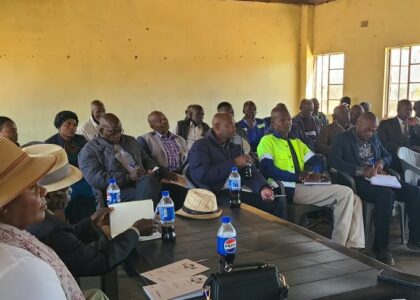
In a move to promote inclusive development, Habakkuk Trust has incorporated People with Disabilities (PWDs) into its Community Advocacy Structures in Bulilima, Bubi and Nkayi Districts. The inclusion of people with disabilities in development comes against a background of marginalization and exclusion from the mainstream of society.
The inclusion of people with disabilities into the community advocacy action teams will enhance their active participation in local level decision making. Their active participation will also yield in the incorporation of people with disabilities into other structures such as VIDCOs. This will in turn enhance the formulation of pro disability strategies and practices in communities.
The move by Habakkuk Trust to include people with disabilities is in line with the country’s legal framework including other regional and international treaties which Zimbabwe is a signatory to. Persons with disabilities are protected under a number legislative laws including the United Nations Convention on the Rights of Persons with Disabilities, which Zimbabwe ratified on 23 September 2013 and which takes a human rights and people-centred based approach to the conceptualization of disability as part of human diversity and humanity; equality of opportunity; accessibility; equality between men and women. In June 2021 the head of state, President Emerson Mnangagwa launched the Disability policy which was crafted as measure to assist in domesticating provisions of the Convention on the Rights of Persons with Disabilities which Zimbabwe ratified.
The National Disability Policy seeks to address the marginalization and discrimination of Persons with Disabilities empower them to improve their own quality of life and enable them to contribute towards the national development agenda. It sets standards for the inclusion of Persons with Disabilities in all facets of life, thereby serving as an overarching policy framework on disability across all sectors, including the public, private and development sectors
Dumisani Ncube